



A coupler is the fitting that clamps gear to a 48-51mm tube. Get the family right and the load takes care of itself.
Article 19 · Rigging
Updated 24 June 2026
Rigging
Explainer
Know your couplers.
Half, swivel, self-lock and quick. Four fittings that look alike and do very different jobs. Here is what each coupler type is, how it works, and when to reach for it.
Half for fixed points. Swivel for any angle. Self-lock and quick for speed.
Reaching for a swivel where a half coupler would do, or a fast fixing where the load wants a bolt.
Match the fitting to the joint first, then spec the working load. Stamped, rated, certified.
The coupler you reach for says more about the joint than the load does. Match the fitting first, then spec the weight.
Four coupler types, side by side.
A coupler is the fitting that connects gear to a tube. Every coupler in the range fits 48 to 51mm scaffold, truss and fly-bar tube, so one fitting standard works across your rig. What changes between the four families is the joint they make, and how fast they make it. Read across the table, then meet each one below.
| Coupler | Primary job | Rotation | Setup speed | Best for | Load capacity |
|---|---|---|---|---|---|
| Half | Fixed-point connection on a single tube | None | Medium | Lights, speakers, pipe-and-drape | Highest |
| Swivel | Joins two tubes at any angle | 360° | Medium | Bracing, cross-beams, off-square structures | High |
| Self-lock | Grips harder as the load comes on | None | Fast | Quick installs and de-rigs, single-tube fixing | Moderate |
| Quick | Hook, tighten, go - no bolt to thread | None | Very fast | Fast fixture hanging, quick turnarounds | Moderate |
Load capacity is shown in relative terms. Every coupler carries its own working load limit, stamped on the fitting. For exact figures by model, see the clamps & couplers page or download the catalogue below.
Meet the four families.
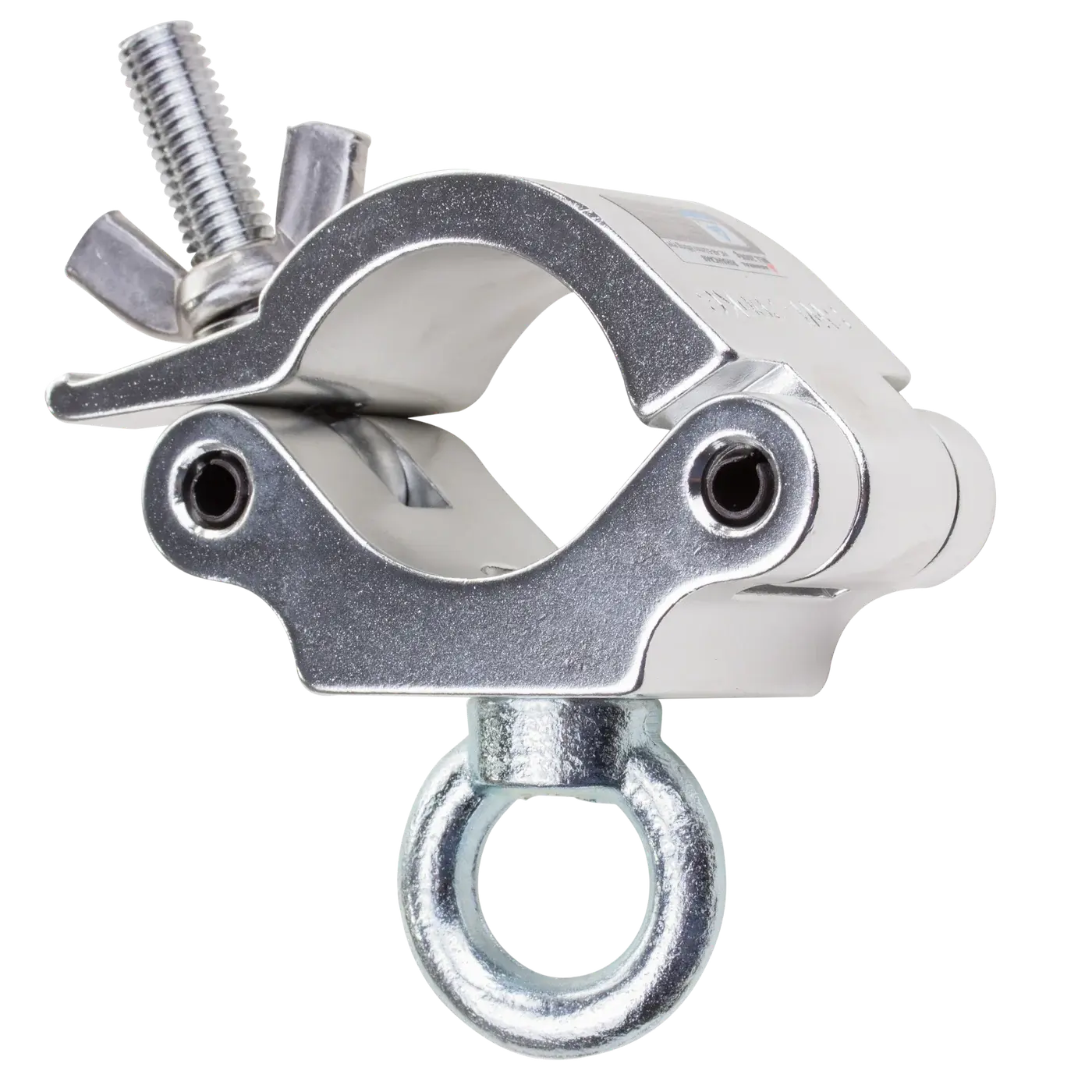
Half coupler
The workhorse.
One forged jaw clamps a single tube and bolts your gear to a fixed point. The connection does not move, which is exactly what you want under a light, a speaker or a pipe-and-drape upright.
How it works
Jaw closes over the tube; an M10 or M12 load bolt carries the gear.
Best for
Fixed points. Lights, speakers, pipe-and-drape.
The trade-off
No movement, no speed shortcut. It is a bolt-up fitting, and the highest-rated of the four.
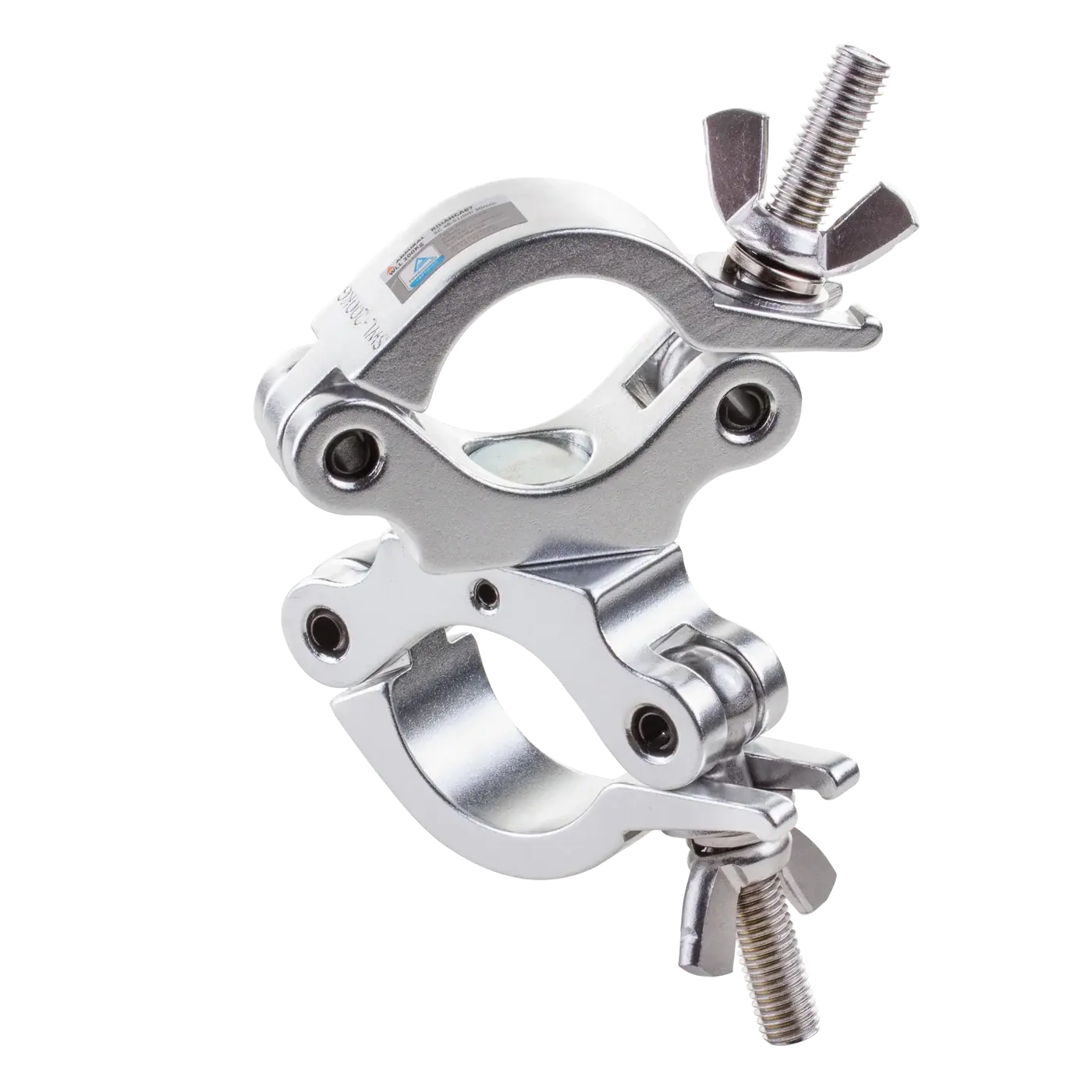
Swivel coupler
Any angle.
Two jaws on a central pin let you join two tubes at any angle and lock them there. When the rig does not run square - bracing, cross-beams, a non-standard structure - the swivel is what makes the joint.
How it works
Each jaw grips a tube; the central pin rotates a full 360 degrees before you lock it off.
Best for
Bracing, cross-beams, off-square structures.
The trade-off
The pivot is a moving part. Spec the load; do not assume it matches a half coupler.
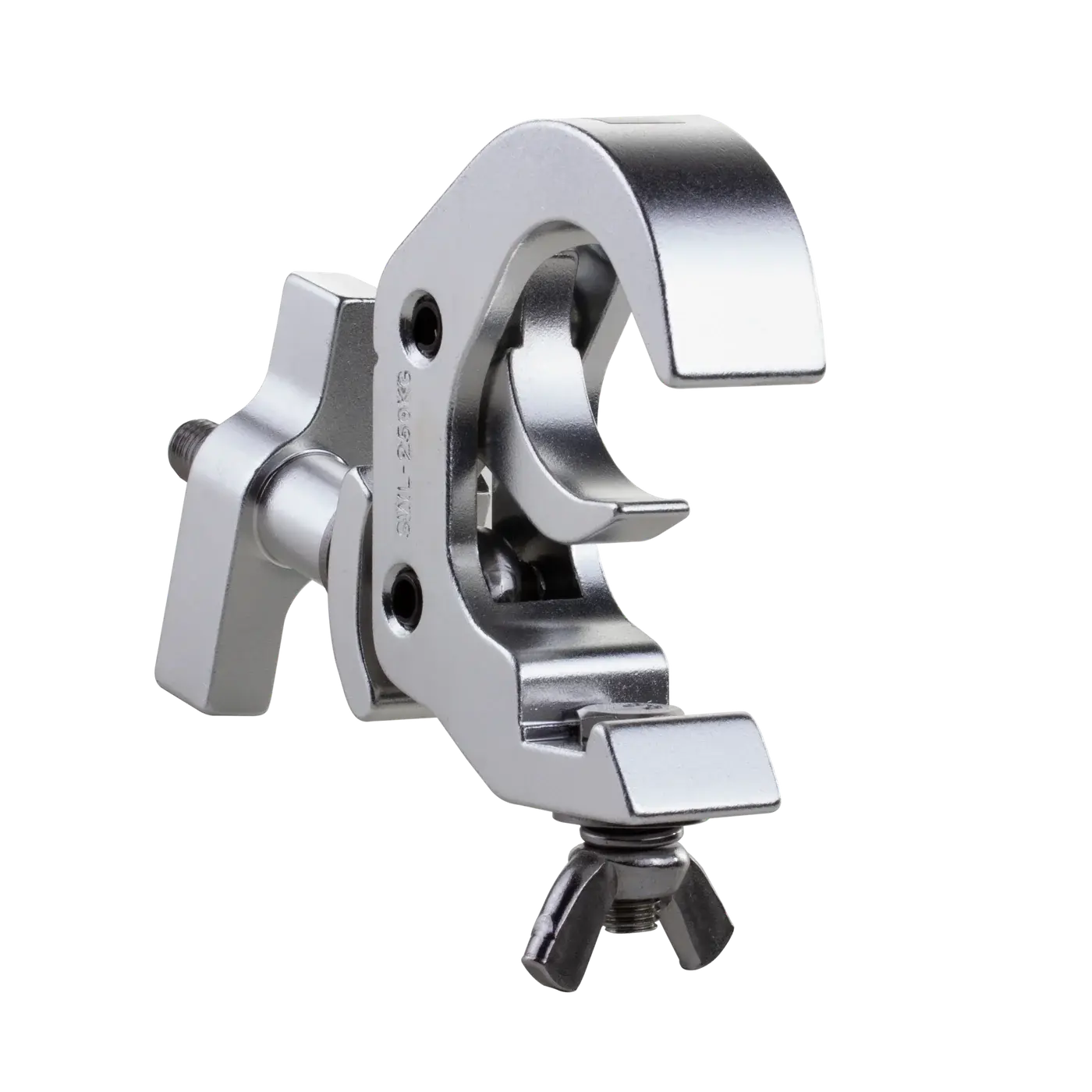
Self-lock coupler
Grip under load.
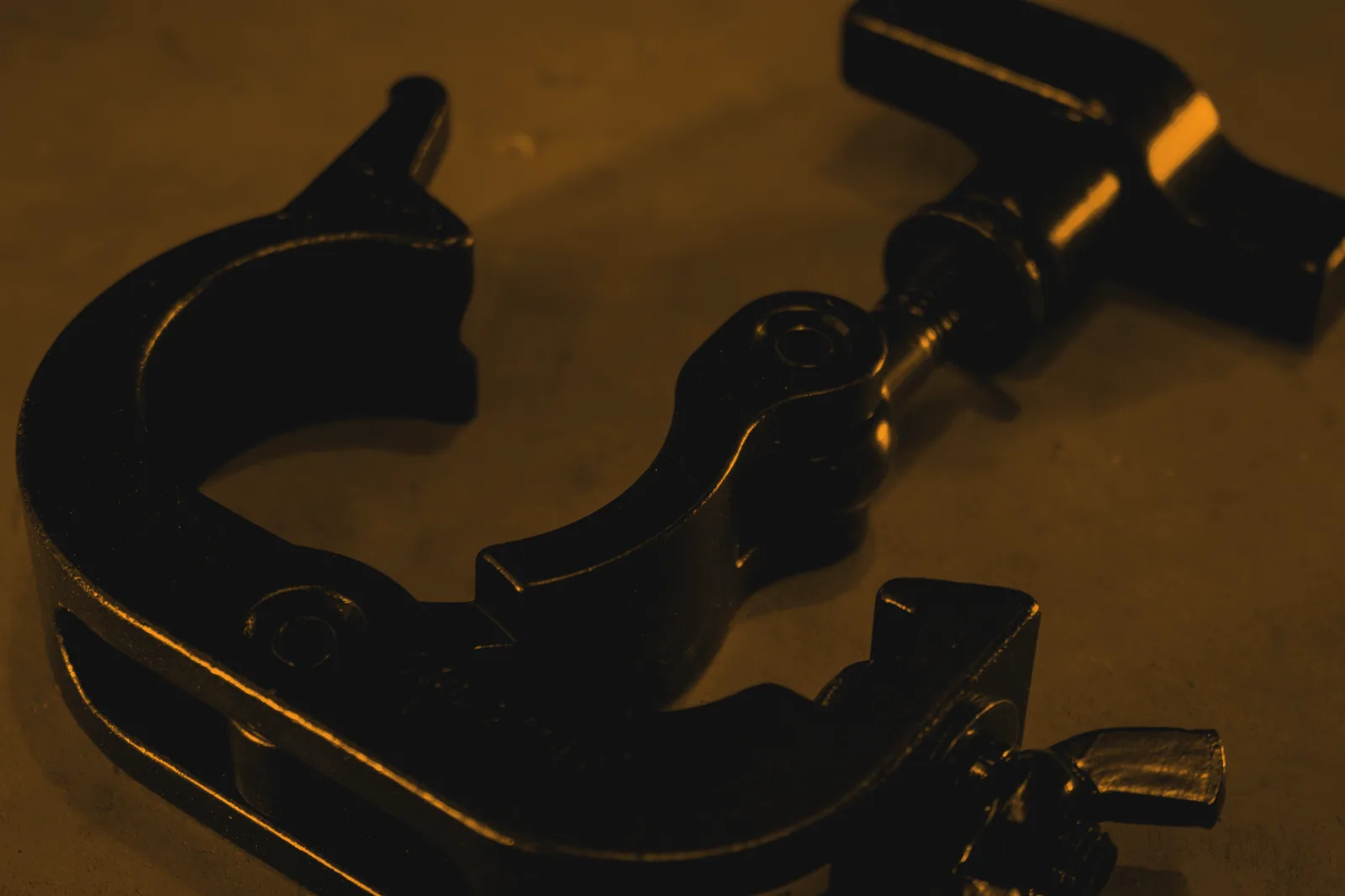
Hooks onto the tube and grips harder as the load comes on, so it holds itself while you work. Set the final tension with the T-handle. Built for quick installs and de-rigs where you do not want to fight the fitting.
How it works
Hook on; the load self-engages the grip; the T-handle sets final tension.
Best for
Fast installs and de-rigs, single-tube fixing.
The trade-off
Speed costs capacity. It carries less than a bolted half coupler.
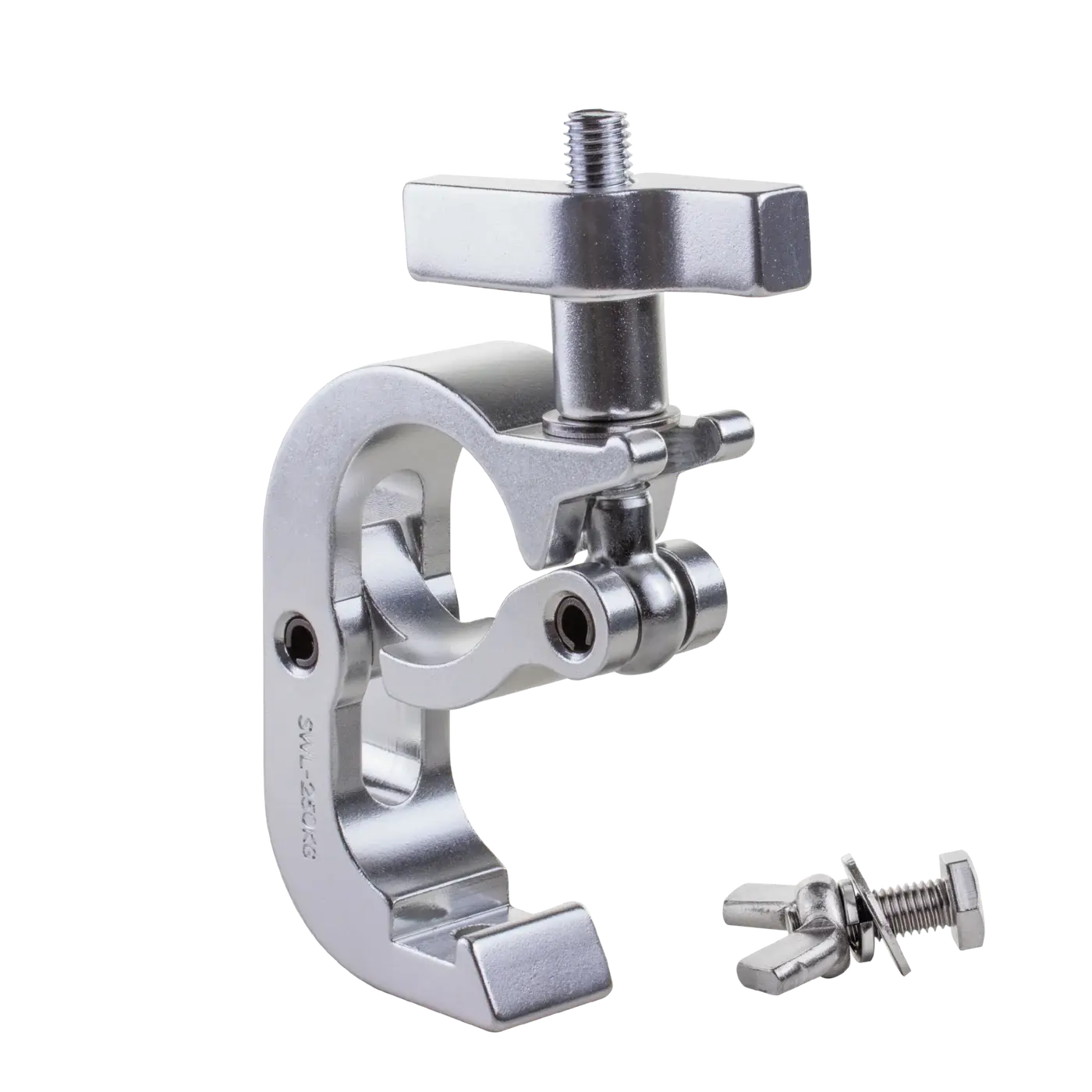
Quick coupler
Quick on, quick off.
Hook, tighten, go. The time-saver for hanging fixtures without threading a bolt every time. When you are turning a rig around between acts or load-ins, the seconds add up.
How it works
Pre-fitted hardware hooks the tube and tightens in one move - no loose bolt to drop.
Best for
Fast fixture hanging, quick turnarounds.
The trade-off
Like self-lock, it trades load capacity for speed.
Which coupler for the job?
Start with the joint you need to make, not the weight you need to hold. The job points you at the family; the working load limit confirms the model. Four quick reads:
- Hanging a fixed load - a light, a speaker, a pipe-and-drape upright? Half coupler.
- Joining tubes that do not meet square - bracing or a cross-beam? Swivel coupler.
- Turning a rig around fast, or rigging solo? Self-lock or quick coupler for the speed.
- Carrying the heaviest single-tube loads? Half coupler - it is the highest-rated family.

Where it goes wrong
- Speccing a swivel where a half coupler would do - you are paying for a pivot you do not need, at a lower load rating.
- Reaching for a fast fixing on a heavy load - speed costs capacity, so check the stamp.
- Over-tightening to "make it safe" - the working load limit is the working load limit; force past it and you damage the fitting, not the risk.
- Mixing fittings without reading each stamp - every coupler carries its own working load limit.
Not sure which family the job calls for? That is a two-minute conversation, not a guess. Our rigging team will talk it through - or grab the catalogue below for the full specs.
Get the full coupler specs - or talk it through.
Free download
Atlas clamps & couplers catalogue.
Every coupler, every working load limit, every dimension in one PDF - emailed straight to you.
Clamps & couplers, stocked.
The full Atlas range in black and silver - half, swivel, self-lock and quick, rated and stamped.
Browse clamps & couplers