





Why does the same fabric look flat on one stage and rich and deep on another? Fullness.
Article · Drapes & Make
Updated 5 Jun 2026
Drapes
Fullness & Finish
Fullness and pleating, explained.
Flat, 50%, 75% or 100% - and box, knife or pinch pleat. Fullness and the header decide how a drape hangs, how it reads under light, and what it weighs on the bar.
Fullness is the extra fabric sewn in over the finished width. 50% means half as much fabric again, gathered into folds.
More fullness reads richer and masks better - and weighs more on the bar and the track. A spec decision, not a default.
Pick fullness for the job, the pleat for the look, and a header that hangs true. We make it to measure.
Fullness is the difference between a bedsheet and a stage curtain. Same cloth, different spec.
What fullness actually is.
Fullness is the extra fabric gathered in across a finished width. A flat drape uses fabric equal to its finished width - that is 1.0 times the fabric. Add 50% fullness and you sew in half as much again - 1.5 times the fabric - gathered into folds. 75% is 1.75 times; 100% is 2.0 times, the deepest standard pleat.
Those folds are the whole point. They are what catches the light and what blocks it. More fullness reads deeper and richer, masks more reliably, and absorbs more sound - and it adds weight on the bar and the track. So fullness is a spec decision tied to the job, not a number to default to.
The pleat families.
Fullness is how much fabric. The pleat is how it is folded - and that sets the look and the structure of the hang.
Box
Symmetrical folds facing each other for a clean, repeating face.
Best for
House curtains and valances.
Knife
Folds all turned the same way for a structured, even drape.
Best for
Legs and structured masking.
Pinch
Gathered and pinched at the header so the fold falls deep and even.
Best for
House and feature drapes.
Gathered
A drawstring tape gathers the fabric - quick to make and easy to adjust.
Best for
Masking and hire stock.
How a drape hangs from the top.
The top finish decides how the drape attaches and how fast you can rig it and strike it. Sewn ties are traditional and adjustable. Eyelets suit permanent installs. Track gliders are for drapes that move. And Option D is the TSA finish: a sewn-in hook-and-loop strip with a D-ring, where the loop feeds around the crossbar and back through the D-ring to fasten flush - fast to hang, consistent, and no tools.
How much fullness, by the job.
There is a right amount of fullness for what the drape is doing. These are the defaults we work from.
| Fullness | Typical job | What it gives you |
|---|---|---|
| Flat (×1.0) | Cycloramas, projection surfaces, painted cloths | No folds to cast a shadow or break the image |
| 50% (×1.5) | Masking: legs, borders, blacks | Reads solid, stays light to handle and rig - the theatre standard |
| 75% (×1.75) | House curtains, feature drapes | A richer fold with more presence front of house |
| 100% (×2.0) | Statement main curtain | The fullest, deepest pleat, and the heaviest on the bar |
More fullness means more fabric, and more fabric means more weight - so the deeper the pleat, the more it matters that the track and the rig are sized to carry it.
Five questions before you order.
Answer these and a made-to-measure drape comes back right the first time.
What is the finished width and drop?
Fullness is added on top of this, not instead of it.
How much fullness?
Match the percentage to the job, not to habit.
Which pleat?
Look and structure follow the pleat and header.
Which top finish?
Sewn ties, eyelets, gliders, or Option D for a fast rig.
What will it weigh?
Fullness drives weight, and weight drives the track and rig.
We've got the make. You set the scene.
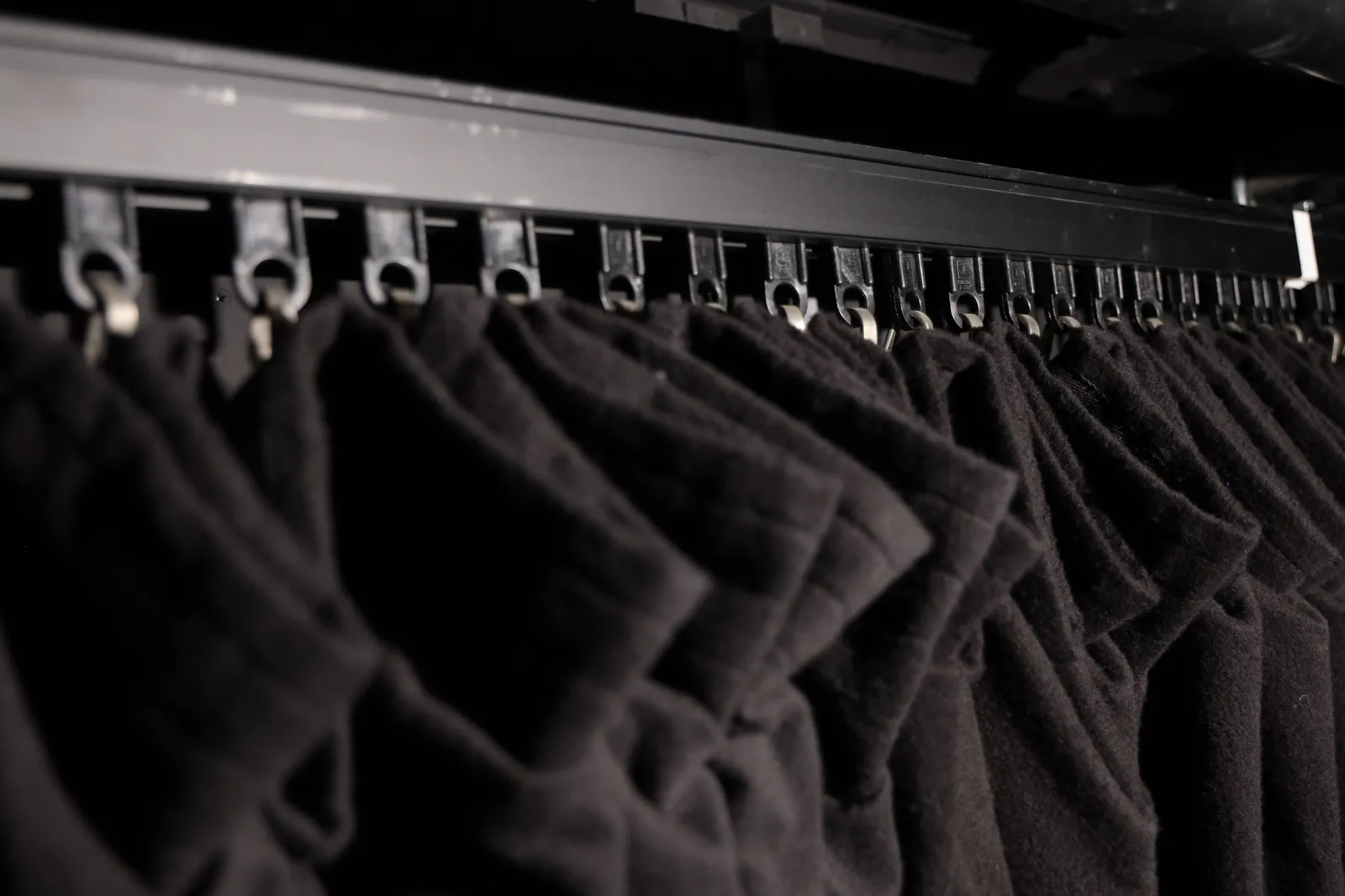
Our drapes are made to measure in-house, with the fullness, pleat and top finish set to the job rather than to a catalogue default - including Option D for the fast hang touring and hire rigs need.
Not sure what your stage wants? The Drape Selector walks fullness, fabric and finish with you and gives you a weight to plan around.
And because deeper fullness means more weight, a Venue Systems Health Check confirms the track and rig can carry it before the drape goes up.
Reveal Productions, the drape manufacturing arm of the TSA group, holds the make-side detail on how each drape type is cut and finished.
We've got the make. You set the scene.
Ready to spec a drape that hangs right?
Free download
Get the drapes catalogue.
Every fabric, finish and fullness option in one PDF - emailed straight to you.
Stage drapes & soft goods.
House curtains, masking, cycs and scrims - made to measure, with the fullness and finish set to the job.
Browse drapes at TSA