

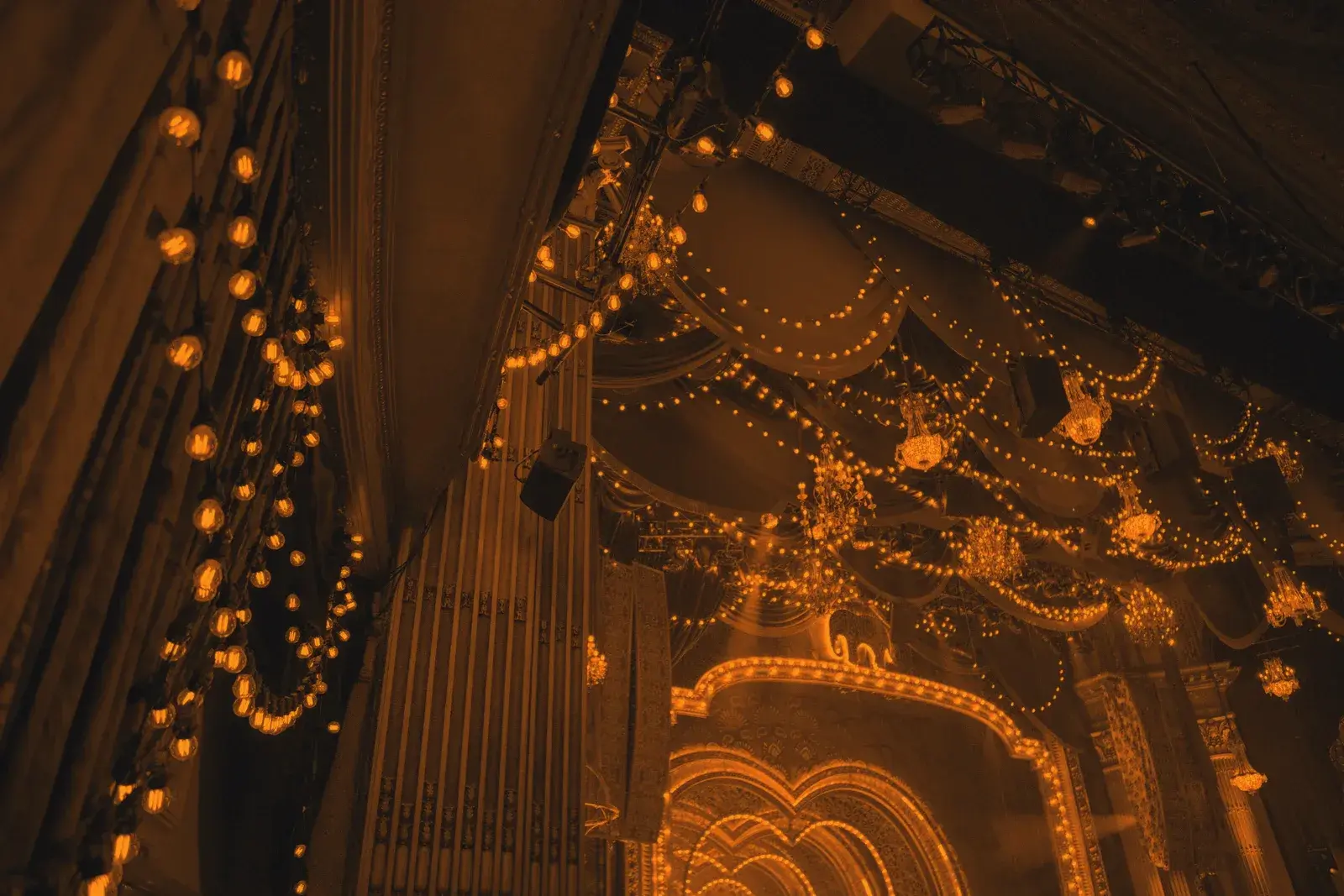




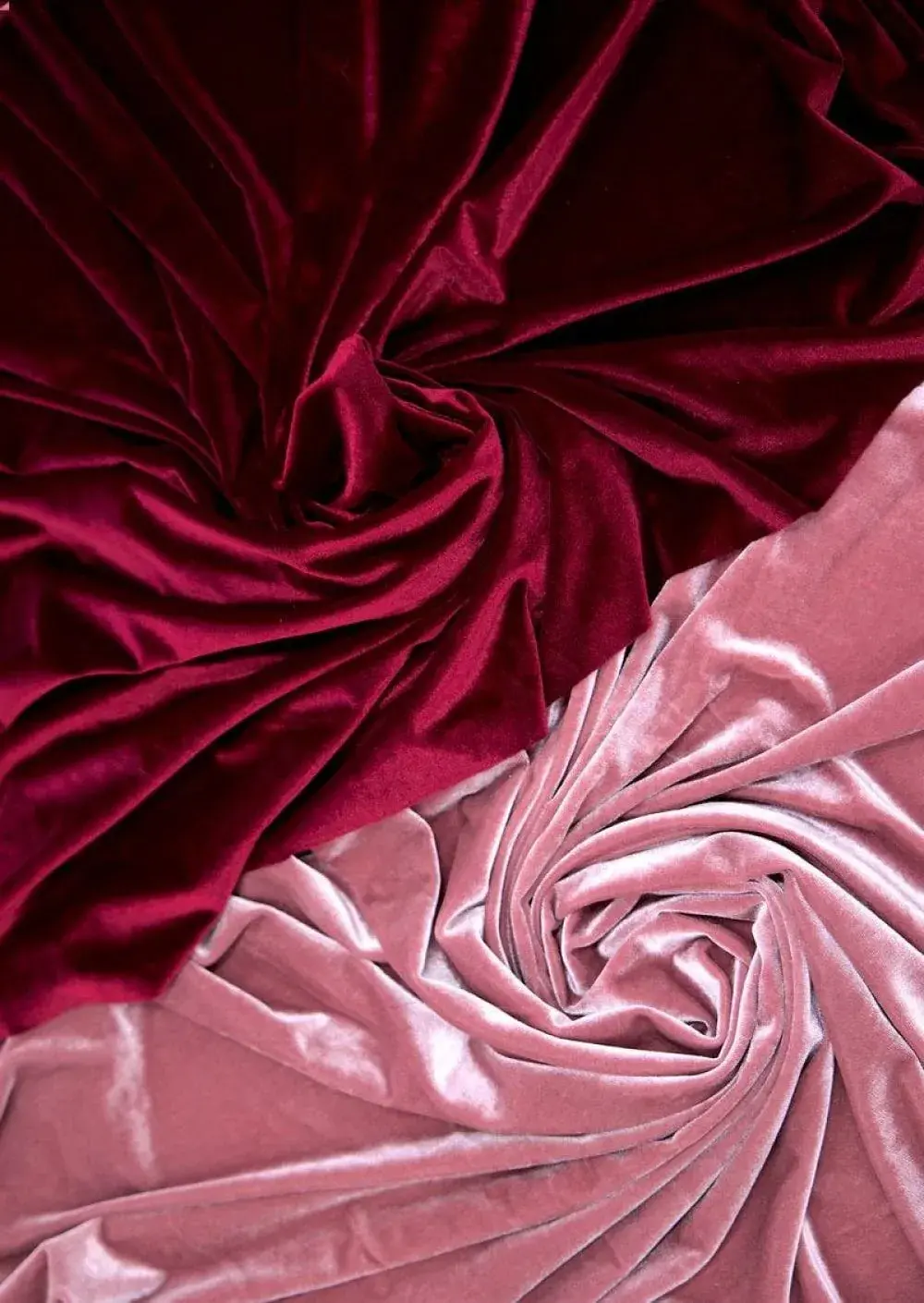
Front of house. Deep colour, plush hand, strong light absorption. The fabric the audience sees.
Drapes · Fabric guide
Updated 12 May 2026
Drapes
Fabric comparison
Velvet, wool serge or molton. How to choose.
Three fabrics handle most of the work on most Australian stages: velvet at front of house, wool serge for masking, Turo molton for budget and short-term. Spec it right and the drape outlasts two refurbishments. Spec it wrong and you pay for the same legs twice.
Masking legs, borders, blacks. Inherently FR, hangs flat, eats light, lasts decades if kept dry.
Budget and short-term. Wide, black, fast. NDFR-treated, so it carries a retreatment cycle.
Front or behind, permanent or short-term, wet or dry, acoustic need, and cost per year of service.
The three fabrics you will be choosing between most of the time.
Choosing the right stage drape fabric is the decision that lands on most Australian specs. Get it right at spec stage and the drape outlasts the venue's next two refurbishments. Get it wrong and you pay for the same set of legs twice.
This is the working comparison TSA uses when a venue, school or production asks us to spec drapes. It is not a complete fabric guide. It is the three fabrics you'll be choosing between most of the time - velvet, wool serge and Turo molton - and how to pick between them.
The headline differences across FR class, weight, width and intended use sit in one table further down. The cards alongside give you the spec rows at a glance, and the chapters below walk the five questions that resolve the choice every time.
Velvet, wool serge and molton, side by side.
Each fabric is engineered for a different job. The spec rows on each card are the numbers that actually drive the decision - FR class, weight, width and care. Read them as a set, not in isolation.
Fabric 01
Velvet / Velour
Deep, even colour saturation, plush hand, and the kind of light absorption that makes a stage feel like a stage. The fabric an audience sees when the house lights come down. Earns its place at front of house.
FR class
IFR or NDFR (fibre-dependent)
Weight
~450 gsm
Width
1.2 m to 1.5 m
Best for
House curtains, valances, swags
Fabric 02
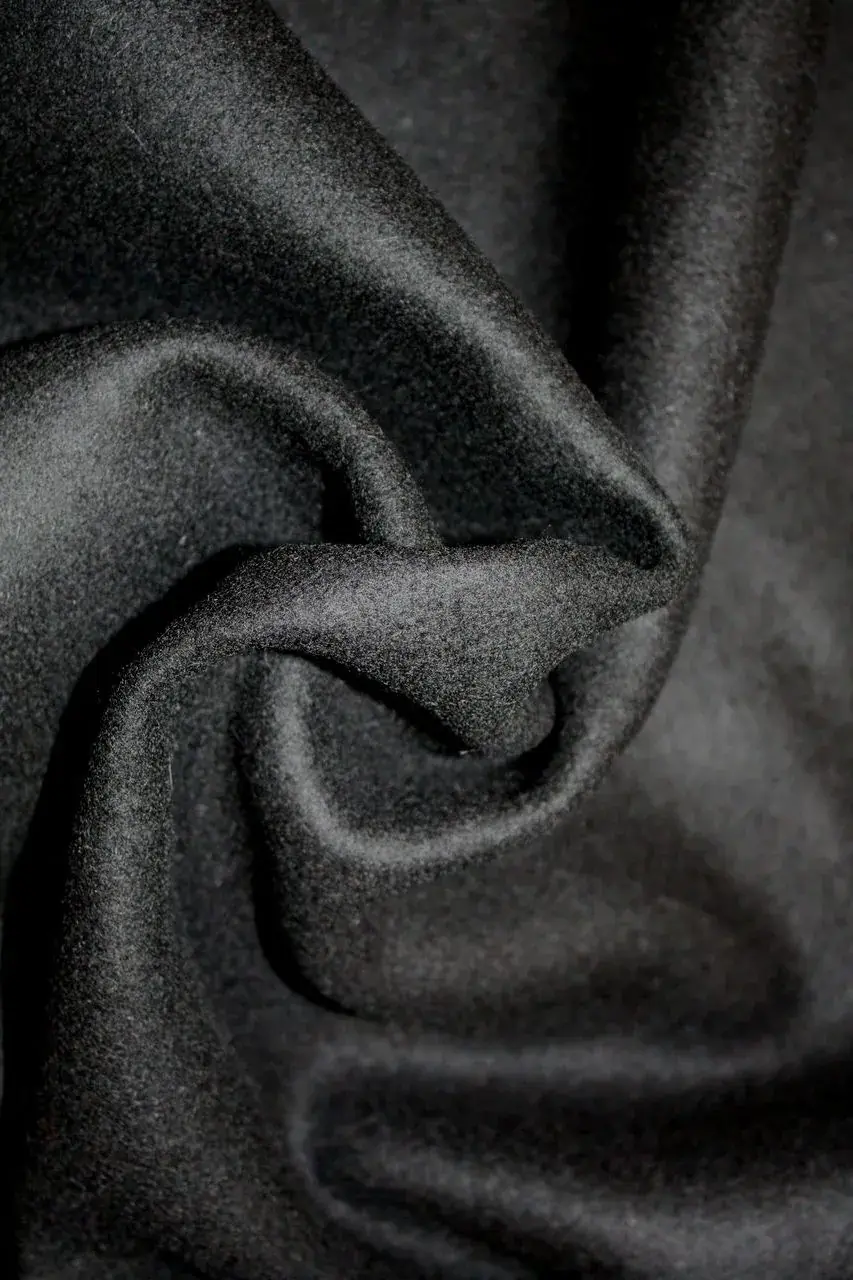
Wool Serge
Hangs flat, eats light, pulls acoustic energy out of the room, and lasts decades if you keep it dry. The default specification for masking across professional Australian stages, and inherently flame retardant - no retreatment cadence.
FR class
IFR (inherent)
Weight
~550 gsm
Width
1.8 m
Best for
Masking legs, borders, blacks
Fabric 03
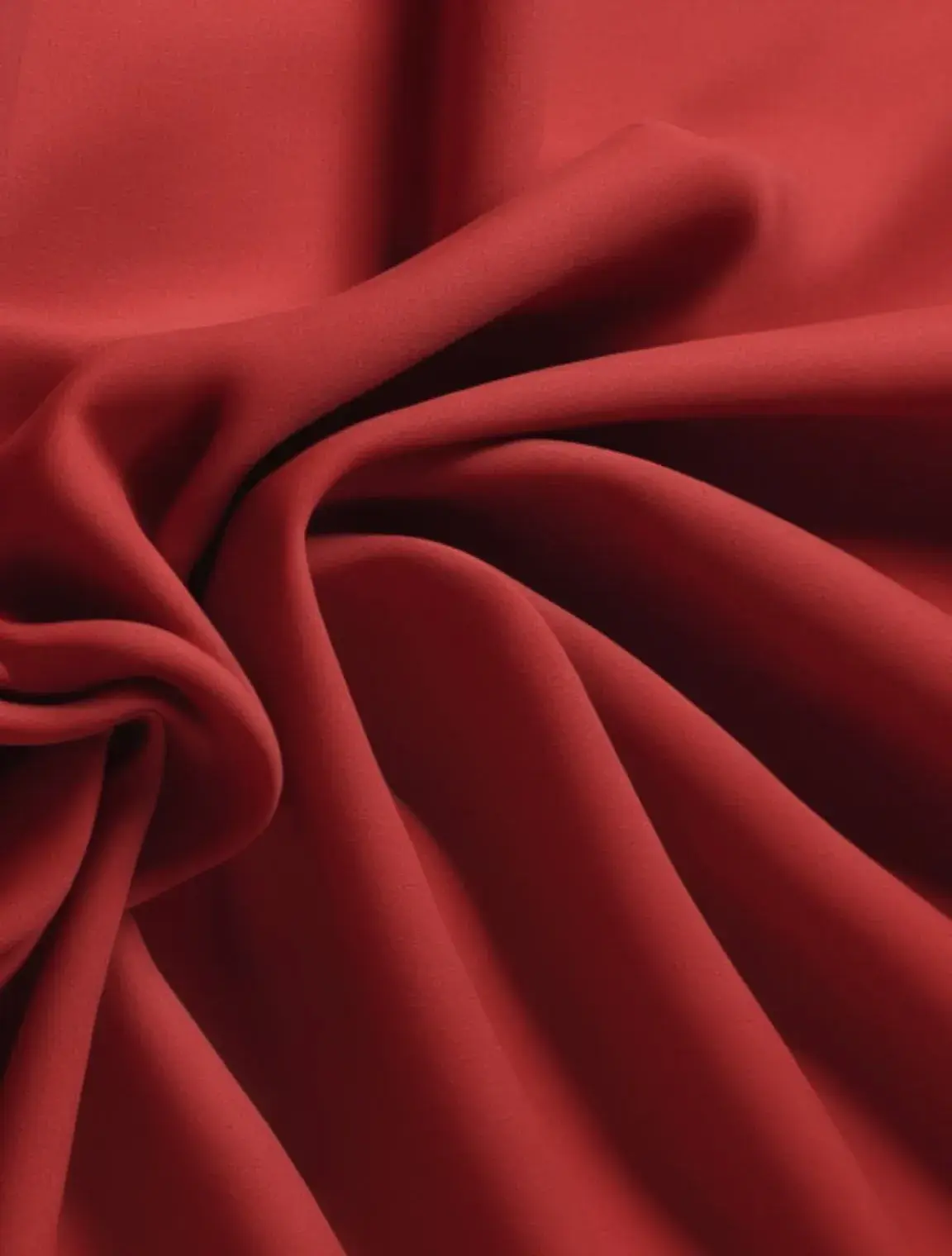
Turo Molton
The answer when the brief reads: we need it next week, in black, three metres wide, and the budget is tight. Engineered for exactly that brief, and it underperforms outside it. NDFR, so the treatment is a surface coat that needs tracking.
FR class
NDFR (treatment-based)
Weight
~320 gsm
Width
3.0 m
Best for
Black box, schools, temporary
| Fabric | FR class | Weight | Width | Best for | Avoid if |
|---|---|---|---|---|---|
| Velvet / Velour | IFR or NDFR (fibre dependent) | ~450 gsm | 1.2 - 1.5 m | House curtains, valances, swags, decorative reveals | You need it touring or budget-led |
| Wool Serge | IFR (inherent) | ~550 gsm | 1.8 m | Masking legs, borders, blacks, travellers | You need a non-standard colour at scale |
| Turo Molton | NDFR (treatment-based) | ~320 gsm | 3.0 m | Black box studios, schools, temporary installs | The drape will see frequent water or wet cleaning |
The numbers behind the choice, read in full.
Velvet is dry-clean only, because water marks the pile and can lift NDFR treatment. When ordering velvet stage curtains, ask explicitly whether the FR is inherent to the fibre or treated. The answer determines whether you have a 25-year asset or a 3-year retreatment cycle. Its width of 1.2 m to 1.5 m means seams are part of the build, and its sound absorption makes it useful for front-of-house and proscenium framing.
Wool serge is the fabric that justifies the line buy once, hang for 30 years. Its 1.8 m width means fewer vertical seams than velvet at full stage depth. It is dry-clean only and can shrink up to 3% if wet, so never spot-clean it with water. Its matte, dense, non-reflective surface is the reason it dominates masking. The stocked palette is Black, Red, Blue and Grey - outside that range, sourcing gets specialised.
Turo molton at 3.0 m wide hangs a stage without vertical seams in most rep theatres and schools. It is non-durably flame retardant: the treatment is a surface coat, and water, paint, dye or repeated handling strips it. Retreat the FR after any wet cleaning, paint application, or visible salt tide marks. The retreatment cycle runs typically every 2 to 3 years under normal use, sooner if the drape gets wet.
Wool serge is not the cheapest option on the quote. It is the cheapest option per year of service.
Five questions, in order. They resolve it every time.
1. Front or behind? If the audience sees it from the front, velvet. If it is doing a job behind the scenes, wool serge or Turo molton.
2. Permanent or short-term? Permanent installs go to velvet or wool serge. Short-term, touring or temporary work goes to Turo molton.
3. How much water exposure? Significant cleaning, condensation or salt air points to wool serge or IFR velvet, which have no FR treatment to lose. Minimal exposure makes Turo molton workable.
4. What is the acoustic requirement? High absorption - large auditoria, recording use, theatre - means wool serge or velvet. If acoustics are a low priority, any of the three works.
5. What cost per year can you defend? Lowest lifetime cost is wool serge. Lowest upfront cost is Turo molton. Best decorative-cost ratio for front of house is velvet.
When none of these three can do the job, we've got your back.
This guide covers the three fabrics that handle most of the brief most of the time. The full TSA drape range runs to a dozen fabrics across velvet, wool, polyester, cotton and synthetic blends - including PolyCyc for cycloramas, sharkstooth gauze for scrim and reveal effects, sheer voile for layered scenic looks, RevPro Blockout for light-tight lining, and filled cloth for matte projection surfaces.
If the brief calls for chromakey, cyc, projection-grade matte white, bleed-through effects, or anything outside the masking and FOH workhorses, the conversation expands beyond velvet, wool serge and Turo molton. We spec it from the fabric library and write it into a quote that lists FR rating, weight, width, finish and track compatibility on a single page.
Weights, widths and swatch detail for each cloth are held on the Reveal Productions fabric library, the drape manufacturing arm of the TSA group.
And if you want to confirm a spec on a real production before committing, drape hire runs wool serge masking, velvet, Turo molton, sharkstooth, cyc and chromakey stock for dry-hire Australia wide. Drapes are manufactured in-house, FR-treated where required, certified, and installed on tested and rated rigging.
We've got your stage. You've got your show.
Ready to spec your drapes for the stage you actually have?
SPEC
One page · one quote
Fabric consult
Explore the range
Talk it through with our team.
Tell us about your stage and your programming. We measure, talk through what the brief actually demands, and write a fabric spec that lists FR rating, weight, width and track compatibility on a single page.
Get a fabric consultStage drapes, scrims & soft goods.
Velvet, wool serge, Turo molton, PolyCyc, sharkstooth and more - manufactured in-house and supplied with an FR treatment certificate where required.
Browse drapes at TSA