

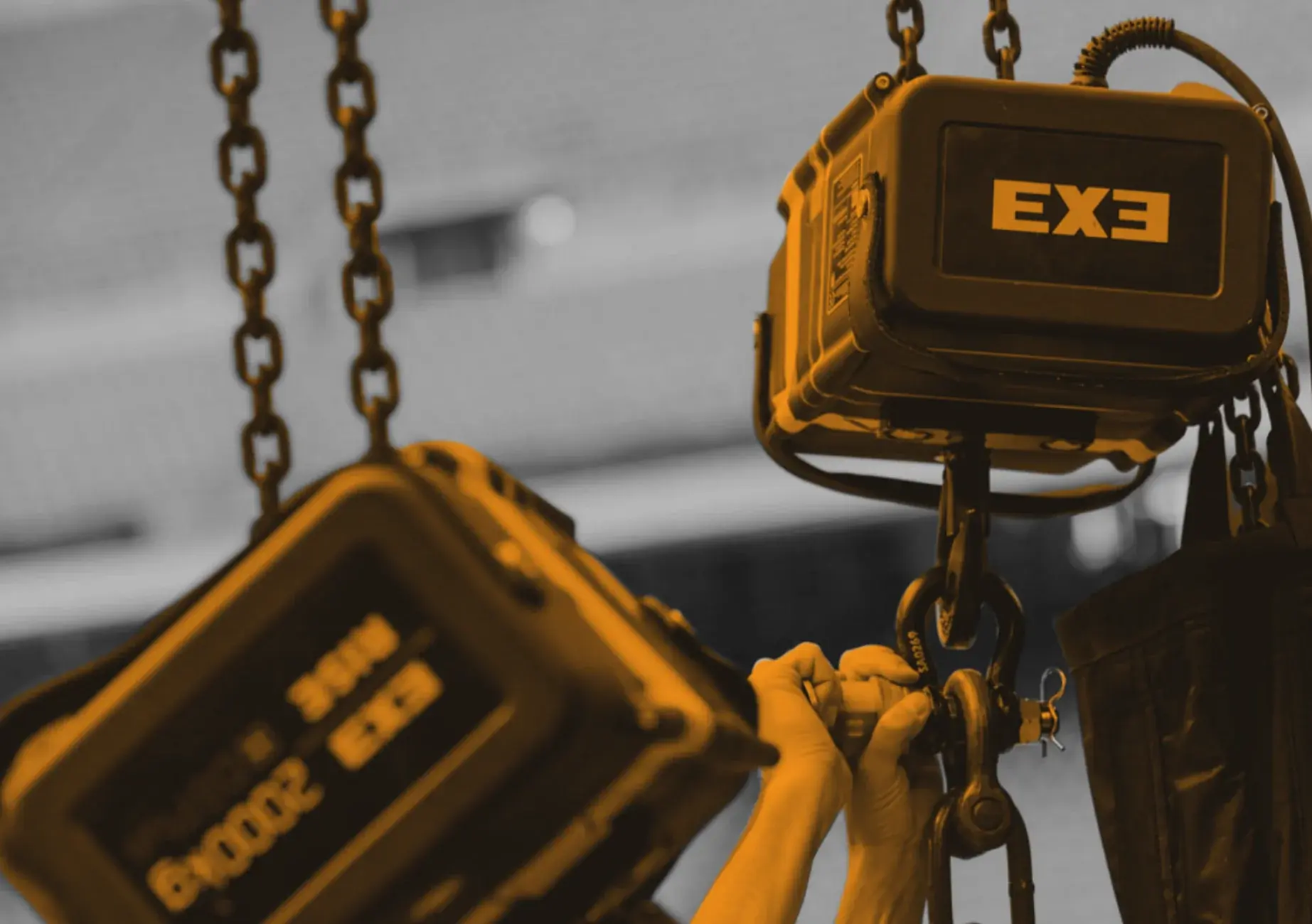
AS 4991 is the Australian Standard that covers lifting devices used in non-permanent installations - including the chain hoists, beam clamps, slings, shackles, and load-bearing accessories that hold scenery, lighting, audio, and performers above a stage. If you operate a venue, run a touring rig, or specify rigging equipment, this is the document your inspector, your insurer, and the regulator will cross-check against.
It runs to about 80 pages of formal engineering language. This article covers the parts that matter on a working stage, in the order they tend to come up.
What AS 4991 actually requires
The standard imposes four broad obligations on the entity operating the equipment:
1. Rated capacity must be visible and verified
Every load-bearing component must carry a legible marking that shows its working load limit (WLL) and a reference to its certificate of conformity. A 1-tonne chain hoist with the rating label scrubbed off the case is non-compliant the moment it leaves the truck, regardless of its actual condition.
2. Equipment must be inspected before each use AND on a documented periodic schedule
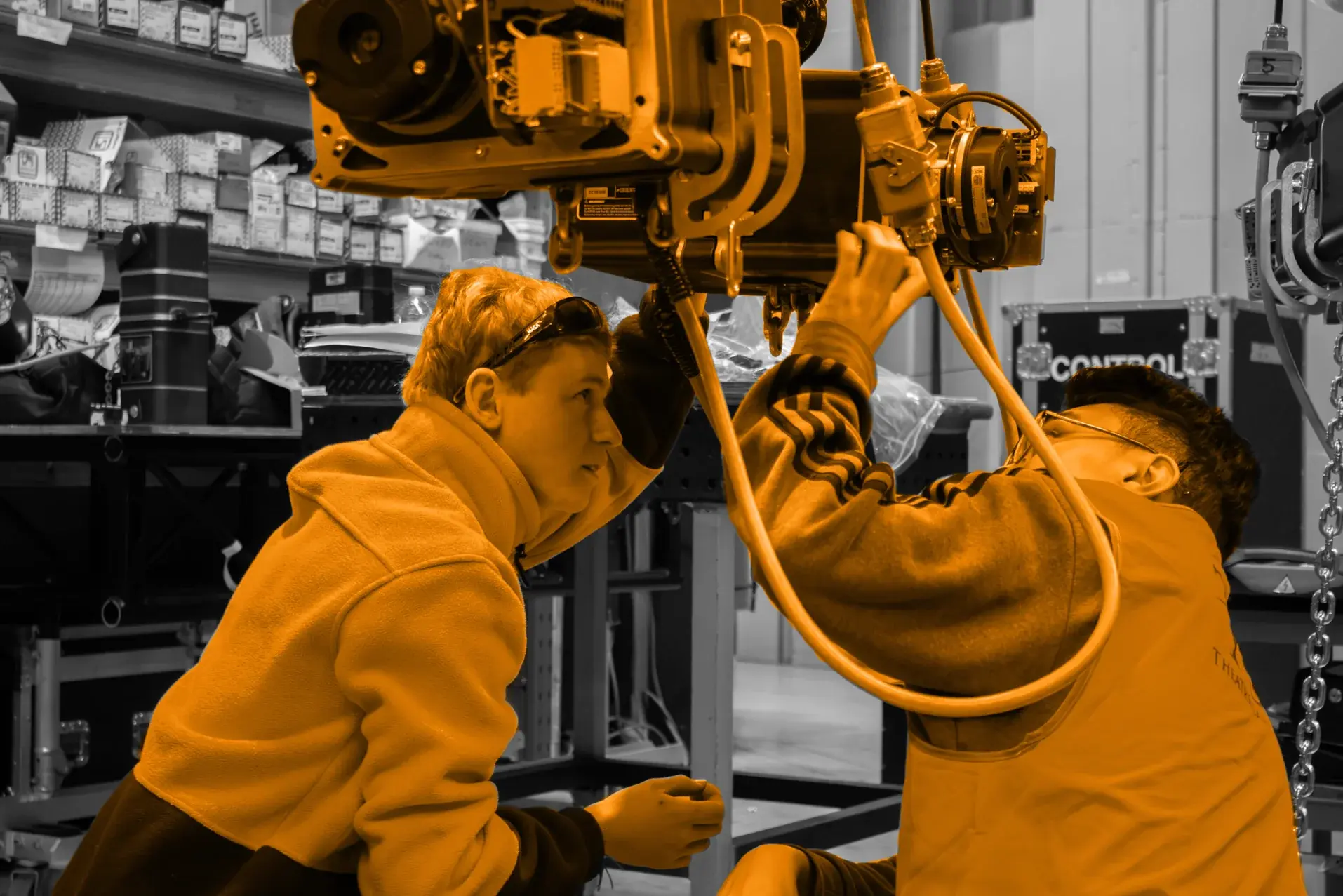
Two layers. The pre-use visual check is the operator's responsibility on the day. The periodic inspection - at a minimum every 12 months for in-service equipment, more often for high-cycle use - must be carried out by a competent person and documented in writing. The inspection record has to live with the gear.
3. A competent person must sign off
The standard uses the term "competent person" deliberately - it doesn't prescribe a qualification, but it does require demonstrable training, experience, and authority for the task. In Australian theatre practice, this means a rigger with an entertainment rigging ticket plus documented inspection training for the specific equipment family.
4. Records must be traceable
Inspection reports, recertification certificates, and de-rate decisions all have to be tied to a unique asset identifier. Most venues operate on an asset-register basis where every chain hoist, beam clamp, and load-bearing component has a permanent ID and a history.
What AS 4991 doesn't cover
Equally important to know what's out of scope:
- Permanent winches and counterweight fly systems - covered by AS 1418.1 and the AS 1418 family, not AS 4991. Different inspection rules apply.
- Lighting truss and stage scaffolding structures - covered by AS/NZS 1170 (loads) and AS 4100 (steel structures) for the structural side.
- Performer flying specifically - additional duty-of-care requirements apply under WHS regulations and venue-specific risk assessments. AS 4991 sets the floor, not the ceiling.
- Electrical safety - AS/NZS 3760 (in-service testing) applies independently to the hoist's electrical systems.
Common compliance gaps we see on inspection
These are the patterns the TSA inspection team picks up most often when running a Venue Systems Health Check:
- Missing or illegible WLL markings. The label has worn off or been painted over during a venue refurbishment.
- Periodic inspection lapsed. Equipment is still in active service past its 12-month re-cert date. The most common gap, by a wide margin.
- No competent-person credentials on file. Inspections have been done, but the person who signed off isn't documented as competent for the equipment.
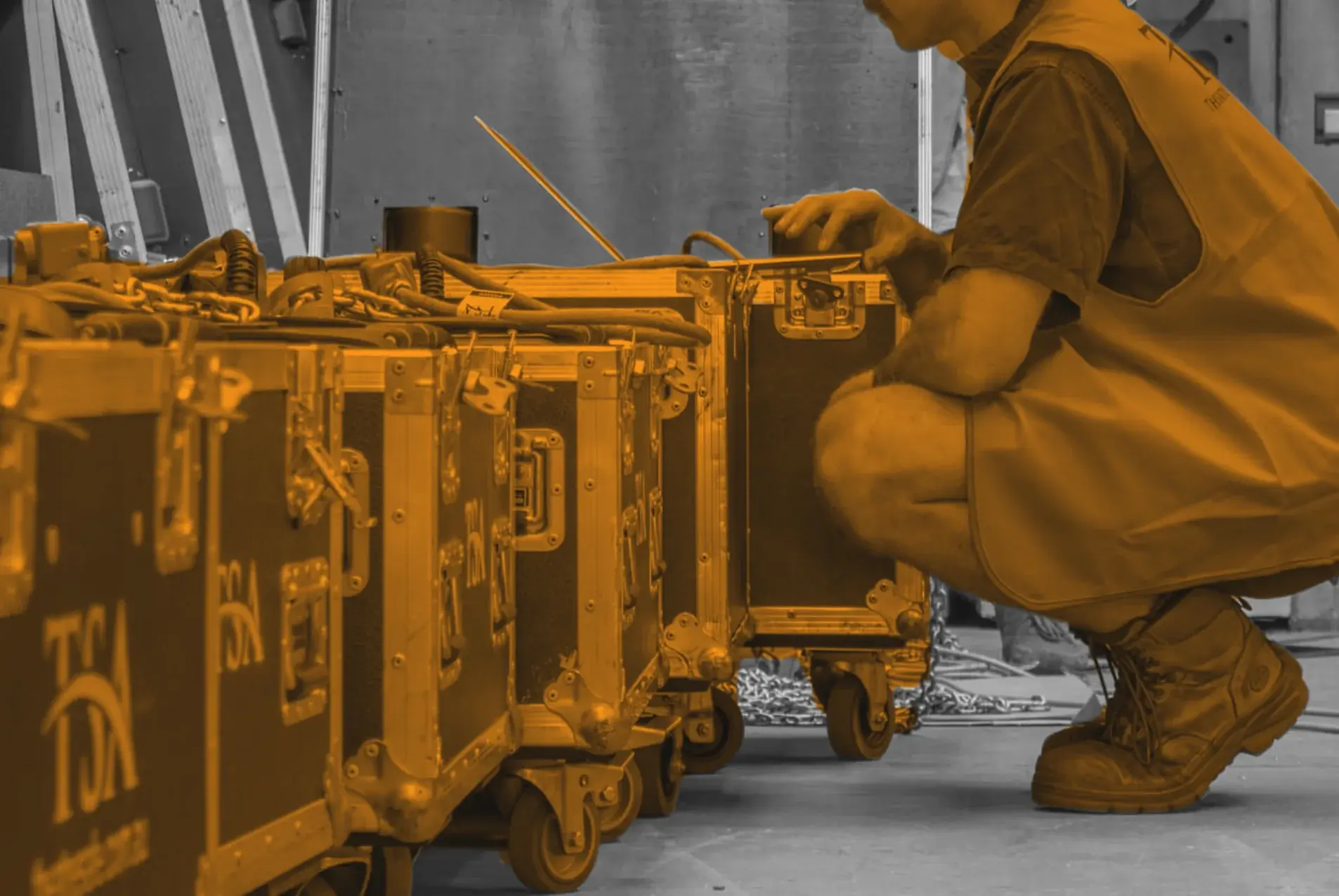
- Mixed-history equipment in a touring rack. Hoists rotated from different fleets without a unified inspection record.
- Accessories assumed in-scope when they aren't. Custom-fabricated brackets and bespoke spreader bars often fall outside the standard inspection regime and need separate engineering documentation.
What "compliant" looks like in practice
A compliant venue, from a paperwork standpoint, has:
- An asset register listing every load-bearing item with a unique ID.
- An inspection schedule with dates, intervals, and competent-person assignments.
- A current inspection report on file for every active asset, signed and dated within the last 12 months.
- A training register showing the competent person's credentials and the date of their last refresher.
- A retirement procedure documenting how equipment leaves service.
If any of those five items is missing, the venue is not compliant - whatever condition the kit is actually in.
Where TSA fits
The TSA compliance team runs the inspection layer for over 200 Australian venues. We hold the asset register, schedule the recertification work, and produce the documentation that insurers and regulators accept. See annual inspections & recertification for the service detail, or call 1300 439 872 to talk through your venue's current state.